DUE DILIGENCE IN REAL ESTATE COULD SAVE YOU MILLIONS
MAKALI ADVOCATES LLP ADVOCATES, COMMISSIONERS FOR OATHS & NOTARY PUBLIC
Published Last updated 3 min read
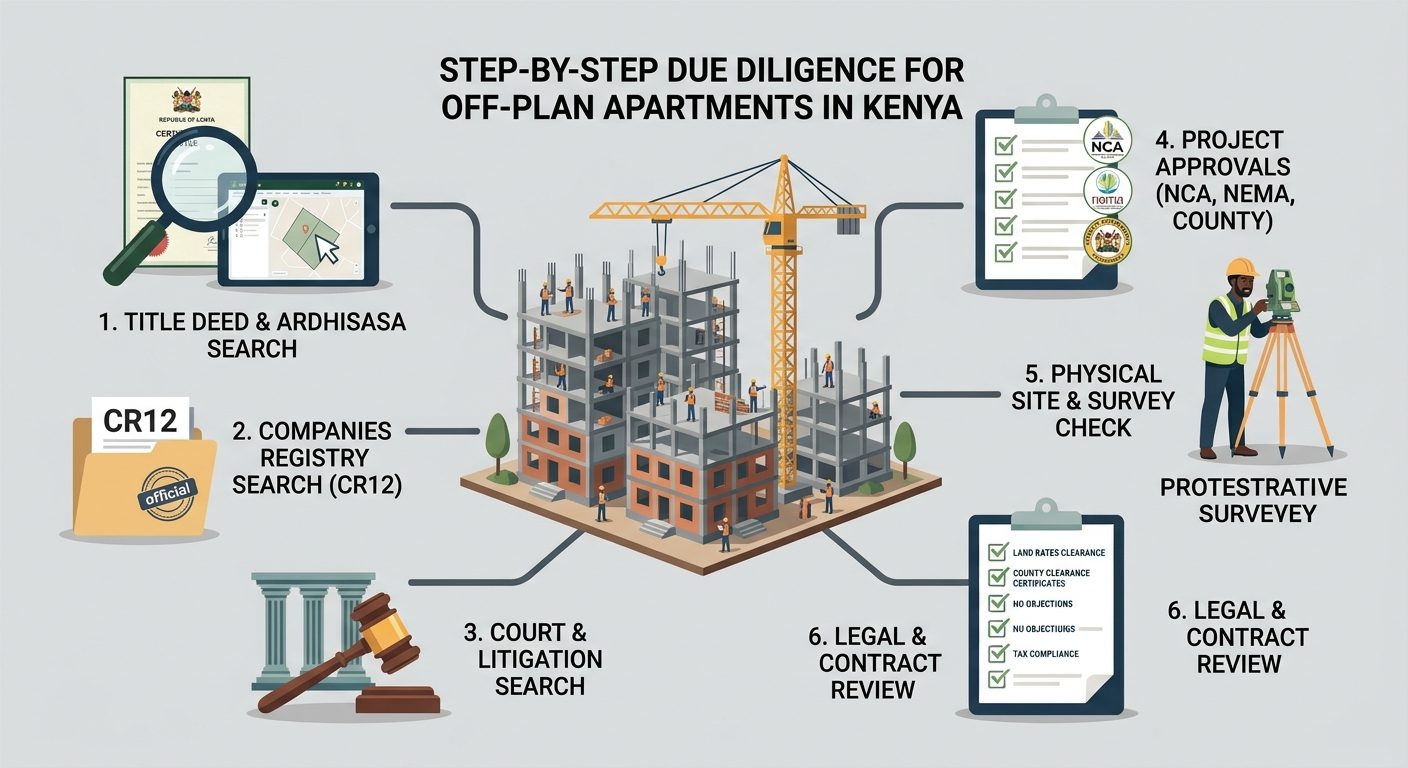
Property transactions often move quickly, driven by urgency, excitement, or fear of missing out. Unfortunately, this rush can expose buyers to fraud, disputes, and unexpected legal problems. In Kenya, it is common for buyers to uncover serious ownership issues only after a transaction has been completed. With so much at stake financially and emotionally, skipping proper checks can turn what seems like a dream investment into a costly mistake. This lived reality makes due diligence essential in any property transaction.
Due diligence is the process of verifying all legal and factual aspects of a property before making any payment. Simply put, it involves confirming that the property being sold is lawful, transferable, and suitable for its intended use. While the process may sound technical, it is comparable to a medical check-up that identifies problems before they become critical. Many buyers have paid deposits only to discover afterward that the property was tied up in competing claims, unpaid fees, or legal restrictions that made transfer impossible. These issues often arise not from dishonesty on the buyer’s part, but from a failure to conduct proper checks through official channels.
The importance of due diligence is illustrated in the case of Arthi Highway Developers Limited v West End Butchery Limited (2015) eKLR. In this instance, buyers relied solely on documents provided by the seller and did not independently verify ownership at the Lands Registry. The court later found that the titles were fraudulent, and despite paying valuable consideration, the buyers lost both the land and the money. This case highlights a critical lesson: documents alone are not proof of ownership unless verified through official land records, and skipping due diligence can have serious financial consequences.
This position has been further reinforced by the Supreme Court in the case of Dina Management Limited v County Government of Mombasa & 5 others (2023) eKLR. The Court held that a title deed is not sufficient proof of ownership where the origin of the title is questionable. A purchaser must demonstrate that the entire process of acquisition, beginning with the original allocation, was lawful. Where the root of the title is tainted by illegality, the protection afforded to a bona fide purchaser does not apply. The decision places a clear obligation on buyers to investigate the history of a property before purchase.
Effective due diligence includes confirming ownership through an official land search, checking for disputes, caveats, or charges, ensuring that land rates and land rent are paid, and verifying that the property is zoned for the intended use. Physical site visits, boundary confirmation, and consultation with the county planning office are equally important. Engaging legal professionals ensures these checks are conducted accurately and that risks are identified early. In a market where land fraud remains prevalent, due diligence is not optional. Ultimately, it is a practical safeguard that protects investments and provides buyers with confidence and peace of mind.
We at Makali Advocates have a dedicated team with vast experience in undertaking due diligence for you whether you are purchasing land, an apartment or any form of property.
This article is general information about the law in Kenya and is not legal advice. It does not create an advocate-client relationship. For advice on your own matter, contact the firm.